
The Organic Science Cluster 4 (OSC4) is a research initiative designed to support the growth and development of organic agriculture in Canada. Funded by the Canadian government, industry stakeholders, and academic partners, OSC4 focuses on advancing scientific knowledge and innovation within the organic sector. It brings together experts to address key challenges facing organic farmers, including pest management, soil health, and crop resilience. By promoting sustainable practices, improving production techniques, and developing new technologies, OSC4 aims to enhance the competitiveness of organic farming, ensuring it remains a viable and sustainable option for the future of agriculture in Canada.
By: William Savard, M. Sc. with contributions by the OCO team
Dr. Caroline Halde is an Associate Professor at Université Laval where she leads the Agroecology Lab. Her work focuses on field crop and forage agronomy, cover crops, and soil health. Dr. Marie-Noëlle Thivierge is a research scientist at Agriculture and Agri-Food Canada, Quebec Research and Development Centre. Her research focuses on forage systems, ecosystem services, and improving cropping practices for resilience and adaptation to climate change.
As part of the Organic Science Cluster 4, Dr. Halde and Dr. Thivierge brought together scientists from different institutions to carry out a multidisciplinary project called Strategies to Enhance Pasture System Resilience and Greenhouse Gases (GHG) Mitigation Potential in Organic Dairy Production. In this blog, we discuss with them to learn more about their motivation in running such a project as well as their perspectives around dairy and organic farming.
A Mission to Tackle Climate Change
Can you briefly summarize the goal and objectives of this research project?
Dr. C. Halde: The overall goal of the project is to study the impacts of various strategies to improve the resilience and GHG mitigation potential of pasture systems for dairy cows, on the productivity and health of soils, plants and animals. The project is divided into 5 different studies, with respective specific objectives. We want to help organic dairy farms become more resilient to climate
change.
From Farm to Lab—Personal Journeys Leading to Impact
Can you share a bit about your background and how it led you to this specific project?
Dr. C. Halde: I grew up on an organic dairy farm located in southern Québec that is certified organic since the mid-1990s. The family farm transitioned to organic in the mid-90’s. After a Bachelor’s degree in Agronomy at Université Laval, I decided to pursue graduate studies outside of Québec to develop my ability to communicate in English. I contacted Dr. Ralph C. Martin, then the director of the Organic Agriculture Centre of Canada in Truro, Nova Scotia. He offered me an interdisciplinary research project on pasture management, combining soil, plant, and animal sciences. There started a great journey of conducting organic research.
Dr. M.-N. Thivierge: My post-doctoral studies focused on the impact of climate change on dairy farms and perennial forage species, and the greater resilience expected from forage mixtures captured my interest. I’ve been experimenting with forage mixtures for nearly 10 years now, and I’m particularly interested in the interactions between species (what combinations of species compete or help each other), above and below ground, and the impact of these interactions on soil health. The farmers I meet in the field often ask me which forage species – and how many species – should be mixed to optimize pasture productivity and resilience: this project is an incredible opportunity to get answers to our common
questions.
The Challenges Dairy Farmers Face Today
What do you think are the biggest challenges facing the Canadian dairy farming industry? Are these the same for both organic and conventional farming?
Dr. C. Halde: I think that maintaining the supply management system in Canada is the biggest challenge for the dairy industry in the upcoming years. And this is true for both organic and conventional systems. The geopolitical instability and its consequences on the market will certainly be challenging for the agricultural sector as a whole.
Bridging Research and Real-World Solutions
How do you engage with the farming community to ensure your research addresses their needs and concerns?
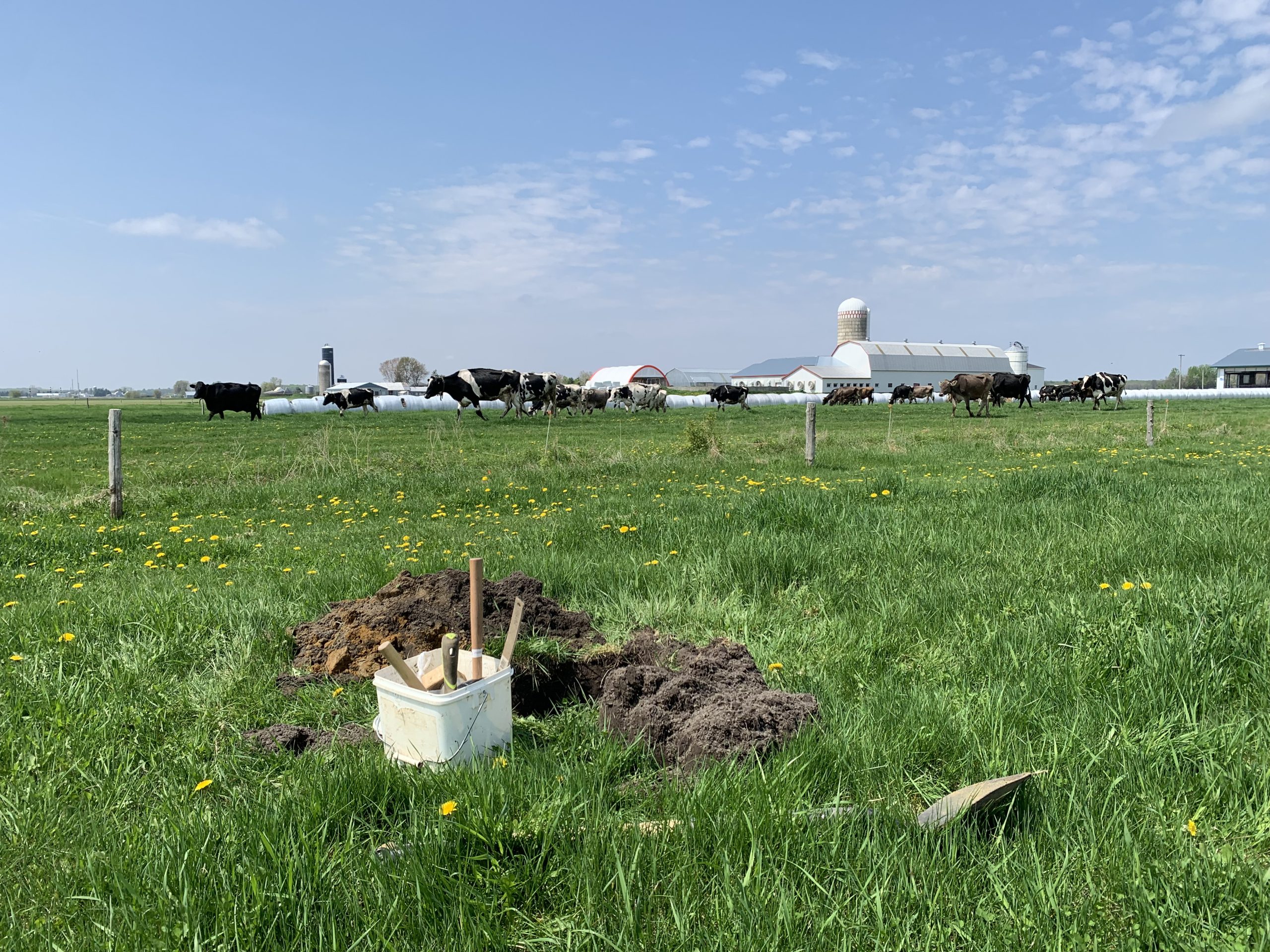
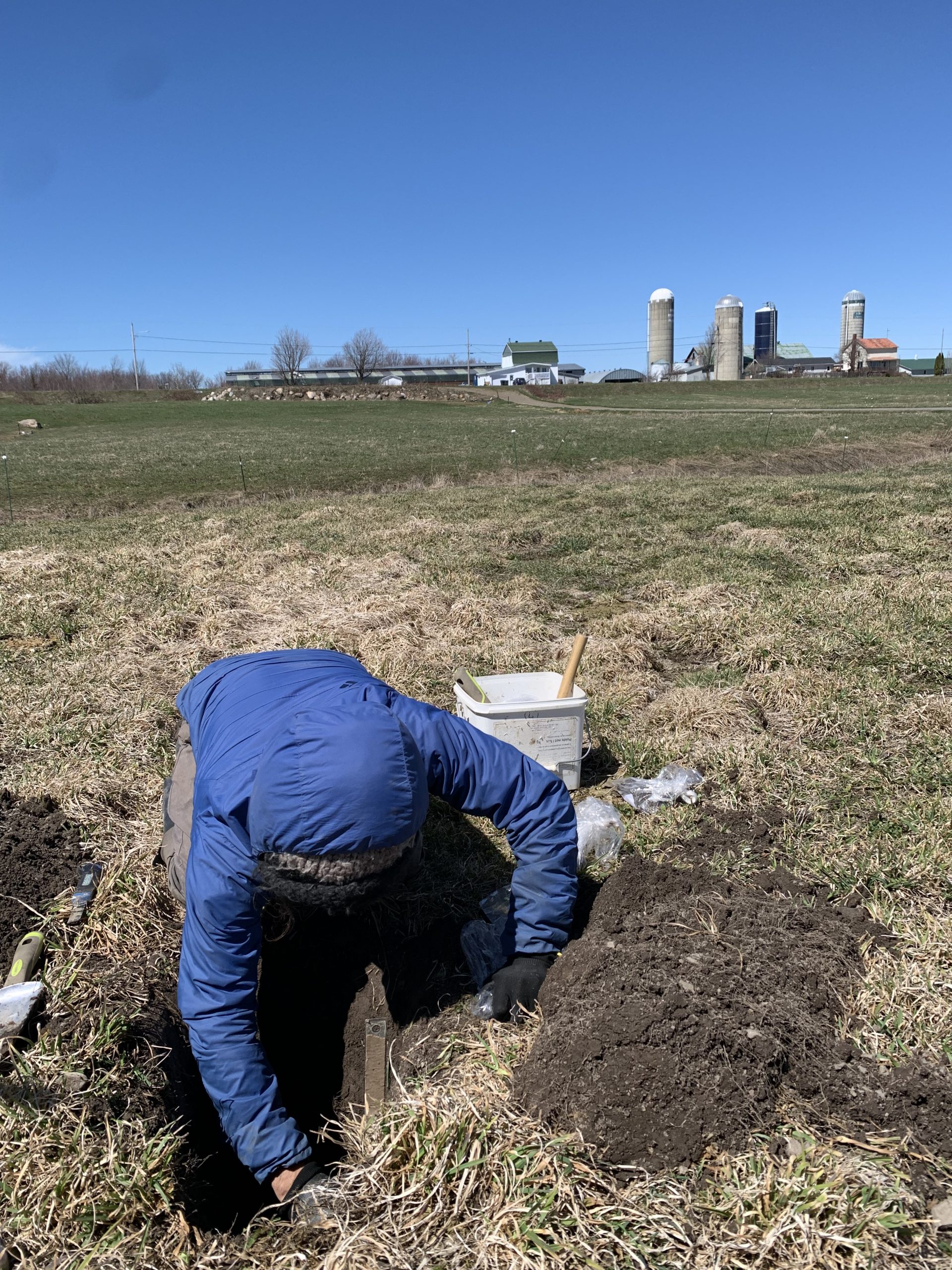
Dr. C. Halde: Getting farmers involved in our research was a priority. We have farmers on our advisory committee. But most importantly, we go meet farmers on their farm to conduct our research. In Study #1, we survey 75 organic dairy farmers to learn about their farm and their pasture management system. In Study 2, we collect soil samples on 48 fields of 16 organic dairy farms in Quebec. We want to better understand what impact pasture management systems have on soil carbon, and to my opinion, this can only be done directly by digging soil pits on dairy farms. Our research will also serve to identify future research priorities that we will be able to address in upcoming research projects.
Dr. M.-N. Thivierge: I’ve been working with the farming community since my Master’s studies, when I facilitated focus groups gathering farmers, advisors and researchers, and travelled around the province interviewing farmers about the sustainability of their farms. Participatory research is still part of my current research program. In Study #3, for example, we consulted nearly 40 farmers and agronomists to determine the research questions and establish the protocol. I also regularly disseminate the results of my research directly to farmers through local presentations and field days, and this is an opportunity for me to hear their questions and better understand their needs so that I can align my research accordingly.
Breaking it Down: A Multifaceted Approach
Why is this research project divided into five studies, and how do these studies complement each other?
Dr. C. Halde: When we first started to brainstorm about the project, we decided that we would aim to enhance the resilience of organic dairy farms in all aspects of their production: in the field as well as in the barn. It became clear that we needed to study resilience in soils, in pastures, and in the barn. We decided to study carbon stocks in the soil, to compare yield and resilience of different mixtures of forage species, to evaluate the cow’s preference for various forage species, and even to assess the environmental impact (methane emissions, nitrogen in urine) when cows are fed with specific forage mixtures. We needed various expertise to achieve this, thus we put together a great team of researchers from 3 universities and 3 research centres.
Aiming for a Sustainable Future: Dairy and Climate Change
Dairy Farmers of Canada is committed to reaching net-zero greenhouse gas emissions by 2050. What do you think of this target, and what impact do you think your research project might have on achieving it?
Dr. C. Halde: I think that it is important that dairy farmers set up targets to fight climate change, to demonstrate that their sector is committed to making changes and becoming more sustainable. I think that the net-zero target is very ambitious, too ambitious even, but still, as a researcher, I am willing to help the dairy sector reach their target.
Turning Research into Action: Real-World Solutions for Farmers
What are the expected outcomes of this research, both in the short term and long term?
Dr. C. Halde: At first, this project will generate essential data on the carbon footprint of grazing systems and their adaptability to climate change. Using this information, we will develop and test innovating organic dairy farming management strategies. Ultimately, this project will provide organic dairy farmers with practical management strategies that will be easily applicable on their farms.
Beyond Borders: The Global Impact of Local Research
Do you think this research project will have an impact outside of Québec and Ontario, and do you think its impact might also extend beyond Canada’s borders?
Dr. C. Halde: Yes! Results from our field experiments will be relevant to other agricultural systems in temperate climate. Also, evaluating carbon stocks in dairy pastures of Quebec and Ontario will help to document the potential of Canadian agriculture for climate change mitigation, from coast to coast.
Animal Agriculture and the Climate Debate
Animal agriculture often has a bad reputation regarding climate change. What do you think of this assertion, and what role should animal agriculture play in the fight against climate change?
Dr. C. Halde: That is a great but difficult question. Our Ph.D. student Pascal Genest-Richard has addressed the agroecological contribution of livestock in a paper published in January 2025 in a peer-reviewed journal. Industrial-scale livestock farming raises some environmental problems, but as Pascal noted, taking advantage of ruminants’ capacity to digest human-inedible plant material such as hay and pasture on marginal land, reduces the competition between livestock feed and human food for arable land. Our conclusion was that a transition towards agroecological and resilient farming systems in general has to be envisioned in parallel with a reduction in animal products consumption to balance nutrient and carbon cycles.
The Future of Organic Dairy Farming
What are your hopes for organic dairy farming in the next few years?
Dr. C. Halde: I wish that our federal and provincial governments [could] recognize the contribution of organic farming to sustainable agriculture and to the net-zero emission target by 2050. Our governments need to be proactive in better supporting farmers interested in transitioning to organic agriculture. We also need better public policies to support schools, hospitals, and other government-funded institutions in buying organic local food for our communities.
Thank you, Dr. Halde and Dr. Thivierge, for sharing your insights and experiences with us. We
look forward to seeing the positive impact of your research on the organic dairy farming
community and beyond.